Ebook The Boy Who Was Raised as a Dog: And Other Stories from a Child Psychiatrist's Notebook--What Traumatized Children Can Teach Us About Loss,
The visibility of the online book or soft data of the The Boy Who Was Raised As A Dog: And Other Stories From A Child Psychiatrist's Notebook--What Traumatized Children Can Teach Us About Loss, will certainly alleviate individuals to get the book. It will additionally save even more time to just browse the title or writer or publisher to obtain up until your book The Boy Who Was Raised As A Dog: And Other Stories From A Child Psychiatrist's Notebook--What Traumatized Children Can Teach Us About Loss, is exposed. After that, you can go to the link download to go to that is provided by this website. So, this will be an excellent time to begin enjoying this publication The Boy Who Was Raised As A Dog: And Other Stories From A Child Psychiatrist's Notebook--What Traumatized Children Can Teach Us About Loss, to check out. Constantly great time with book The Boy Who Was Raised As A Dog: And Other Stories From A Child Psychiatrist's Notebook--What Traumatized Children Can Teach Us About Loss,, always great time with money to invest!
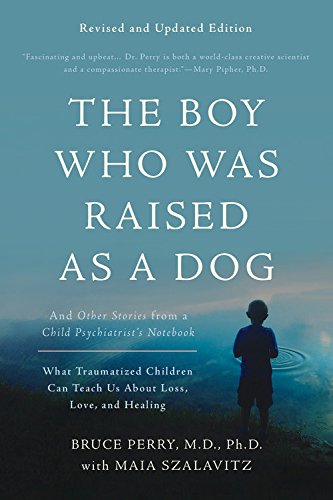
The Boy Who Was Raised as a Dog: And Other Stories from a Child Psychiatrist's Notebook--What Traumatized Children Can Teach Us About Loss,

Ebook The Boy Who Was Raised as a Dog: And Other Stories from a Child Psychiatrist's Notebook--What Traumatized Children Can Teach Us About Loss,
When you are rushed of work deadline as well as have no concept to obtain inspiration, The Boy Who Was Raised As A Dog: And Other Stories From A Child Psychiatrist's Notebook--What Traumatized Children Can Teach Us About Loss, publication is one of your options to take. Schedule The Boy Who Was Raised As A Dog: And Other Stories From A Child Psychiatrist's Notebook--What Traumatized Children Can Teach Us About Loss, will provide you the appropriate source and also point to obtain motivations. It is not only about the tasks for politic company, administration, economics, and various other. Some bought works making some fiction your jobs likewise need motivations to get over the work. As what you need, this The Boy Who Was Raised As A Dog: And Other Stories From A Child Psychiatrist's Notebook--What Traumatized Children Can Teach Us About Loss, will probably be your choice.
Also the rate of an e-book The Boy Who Was Raised As A Dog: And Other Stories From A Child Psychiatrist's Notebook--What Traumatized Children Can Teach Us About Loss, is so budget-friendly; many individuals are actually thrifty to set aside their cash to purchase the books. The other factors are that they really feel bad as well as have no time to go to guide company to look guide The Boy Who Was Raised As A Dog: And Other Stories From A Child Psychiatrist's Notebook--What Traumatized Children Can Teach Us About Loss, to check out. Well, this is contemporary period; numerous e-books can be obtained effortlessly. As this The Boy Who Was Raised As A Dog: And Other Stories From A Child Psychiatrist's Notebook--What Traumatized Children Can Teach Us About Loss, and also more books, they can be obtained in quite quick methods. You will not require to go outdoors to get this e-book The Boy Who Was Raised As A Dog: And Other Stories From A Child Psychiatrist's Notebook--What Traumatized Children Can Teach Us About Loss,
By visiting this page, you have done the appropriate staring point. This is your begin to pick the book The Boy Who Was Raised As A Dog: And Other Stories From A Child Psychiatrist's Notebook--What Traumatized Children Can Teach Us About Loss, that you want. There are whole lots of referred e-books to review. When you want to obtain this The Boy Who Was Raised As A Dog: And Other Stories From A Child Psychiatrist's Notebook--What Traumatized Children Can Teach Us About Loss, as your book reading, you could click the link web page to download The Boy Who Was Raised As A Dog: And Other Stories From A Child Psychiatrist's Notebook--What Traumatized Children Can Teach Us About Loss, In few time, you have actually owned your referred publications as all yours.
Due to the fact that of this publication The Boy Who Was Raised As A Dog: And Other Stories From A Child Psychiatrist's Notebook--What Traumatized Children Can Teach Us About Loss, is sold by on the internet, it will alleviate you not to print it. you can obtain the soft documents of this The Boy Who Was Raised As A Dog: And Other Stories From A Child Psychiatrist's Notebook--What Traumatized Children Can Teach Us About Loss, to save money in your computer system, gizmo, as well as a lot more gadgets. It depends upon your willingness where and also where you will certainly review The Boy Who Was Raised As A Dog: And Other Stories From A Child Psychiatrist's Notebook--What Traumatized Children Can Teach Us About Loss, One that you need to consistently bear in mind is that reading book The Boy Who Was Raised As A Dog: And Other Stories From A Child Psychiatrist's Notebook--What Traumatized Children Can Teach Us About Loss, will endless. You will have going to check out other publication after completing a book, and it's constantly.
How does trauma affect a child's mind—and how can that mind recover? In the classic The Boy Who Was Raised as a Dog, Dr. Perry explains what happens to the brains of children exposed to extreme stress and shares their lessons of courage, humanity, and hope. Only when we understand the science of the mind and the power of love and nurturing, can we hope to heal the spirit of even the most wounded child.
- Sales Rank: #535085 in Books
- Published on: 2017-08-08
- Released on: 2017-08-08
- Original language: English
- Binding: Paperback
- 320 pages
From Publishers Weekly
In beautifully written, fascinating accounts of experiences working with emotionally stunted and traumatized children, child psychiatrist Perry educates readers about how early-life stress and violence affects the developing brain. He offers simple yet vivid illustrations of the stress response and the brain's mechanisms with facts and images that crystallize in the mind without being too detailed or confusing. The stories exhibit compassion, understanding and hope as Perry paints detailed, humane pictures of patients who have experienced violence, sexual abuse or neglect, and Perry invites the reader on his own journey to understanding how the developing child's brain works. He learns that to facilitate recovery, the loss of control and powerlessness felt by a child during a traumatic experience must be counteracted. Recovery requires that the patient be "in charge of key aspects of the therapeutic interaction." He emphasizes that the brain of a traumatized child can be remolded with patterned, repetitive experiences in a safe environment. Most importantly, as such trauma involves the shattering of human connections, "lasting, caring connections to others" are irreplaceable in healing; medications and therapy alone cannot do the job. "Relationships are the agents of change and the most powerful therapy is human love," Perry concludes. (Jan.)
Copyright � Reed Business Information, a division of Reed Elsevier Inc. All rights reserved.
From Booklist
Although many parents fret over how to raise a more academically and financially successful child, Perry has learned a thing or two about how not to raise a prospective sociopath. Here he shares the stories of several children he has encountered in his decades as a child psychiatrist and expert on childhood trauma. Each child, from the seven-year-old who offered him sexual favors to the eponymous boy who spent his early years living in a dog cage, taught Perry something about the effects of early childhood trauma on brain development. His discoveries contradict the formerly held precept that children are emotionally resilient and will outgrow insults to their psyches. On the contrary, he says, severe and occasionally even not-so-severe emotional or physical abuse can chemically alter early brain development, resulting later in the inability to make appropriate, socially sanctioned behavioral decisions. Perry doesn't promote what he calls the "abuse excuse" for antisocial or criminal behavior; rather, he makes a powerful case for early intervention for disruptive children to prevent adult sociopathy. Donna Chavez
Copyright � American Library Association. All rights reserved
Review
"Readable, informative about the workings of language, memory, trust, and choice, and ultimately optimistic---while critical of a society that exudes violence and ignores prevention---this book demands and deserves attention from parents, educators, policymakers, courts, and therapists. Highly recommended." ---Library Journal Starred Review
Most helpful customer reviews
6 of 6 people found the following review helpful.
A Hopeful Guide to Better Future Generations
By Winston D. Jen
Bruce Perry is a psychologist with extensive study and experience in his field. Although many adults, arrogant parents in particular, think they know what is best for their children under all circumstances, Perry shows that by looking at parenting from many angles, it is possible to provide children with better environments, happier lives and more upstanding and productive lives as adults. As the old meme goes, when children see adults show kindness to animals and the less fortunate, they internalise these lessons and apply them in their own lives. Brutal and violent parenting, on the other hand, can lead to bitter adults that see everyone else as their enemies. Having never been shown trust, they assume that everyone else is as untrustworthy as the brutes that "looked after" them as children and teenagers.
A wise young mother, Mama P, exemplifies the ideal maternal approach to parenting. Children need what they need, and they should not be put into boxes of "toddler," "adolescent," "teenager" or "male" or "female" and treated according to social mores and stereotypes. No qualified doctor would think of prescribing insulin to a non-diabetic. Some children, starved for affection by callous or simply ignorant parents, will fail to reach their full potential, even when it comes to something as basic as growth. Young children cannot simply become physically healthy adults simply by ingesting nutrients. If human contact isn't there, toddlers will remain short-statured and could even die from neglect alone. A study in the 1940s found that over a third of neglected infants simply die. This was described in great detail in Failure to Thrive: a Practice Guide by Chichester and published in the United Kingdom.
Perry details several riveting case studies, including a young girl who was raped, children who were fortunately rescued from the Branch Davidian cult, and one victim whose mother abused him to gain attention (she suffered from Munchausen's by Proxy). The trauma recounted within will no doubt be difficult reading, but this is one of the most important non-fiction books in the 21st century. Finally, we have empirical evidence that demolishes any last hope paternalistic despots have of defending their style of "parenting." Caretakers can say "suck it up" or "learn to love yourself" until they're blue in the face, but such attitudes only lead to misery and destructive self-replicating spirals.
Children need to be loved before they can learn to love themselves.
195 of 198 people found the following review helpful.
Brilliant and heartening
By Karen Franklin
Assisted by a talented science writer, child psychiatrist Bruce Perry presents a series of heartbreaking stories of children severely damaged by trauma. But that's only one side of this remarkable book. The other side is how many of these profoundly damaged children were assisted to heal.
Perry explains his "neurosequential" approach that sequentially targets brain regions left undeveloped by abuse or neglect. He presents compelling cases to illustrate how the child's age at the time of the abuse or neglect will determine the gaps in neurological development and how his interventions sequentially target those developmental gaps. For children whose brains were stalled out in infancy, for example, therapy may start with healing touch or rhythm before moving on to higher brain activities.
The focus, always, is on the child's humanity. Perry explains the importance of listening and letting the child set the pace. He warns of the damage caused by well-intentioned but poorly trained therapists who push children to open up, or who administer punitive interventions in the guise of treatment. Healing is not about a specific technique administered in cookbook fashion but, rather, about love, and restoring shattered human connections.
This is an enlightening and heartening book and a real page-turner to boot. The neurological underpinnings of the trauma theory are presented in clear English accessible to anyone who can read. If you're a mental health professional, psychologist, or psychiatrist, you'll love this book. If you're a parent or a teacher, it's also for you. Whoever you are, it's for you. I guarantee you will be engaged and inspired.
4 of 4 people found the following review helpful.
Practical, Well-Researched, Easy-to-Read, Hopeful and Inspiring
By M. Benedett
This book is one of the best books I've ever read. It is evidence-based and well-researched, explaining the workings of scientific discoveries about nature/nurture and the brain in a way that people of all science levels will be able to understand. It also does an excellent job of interspersing true, disturbing stories of child neglect and abuse with hope and practical tips for helping those we encounter in our lives who may have experienced these horrible things. It does not bring in horrible stories to "shock" and does not dwell on them in a way that is unhelpful and just re traumatizing. This has been so helpful for me as a Master of Social Work student, but I also see how it could be beneficial for anyone working with kids, from teachers to foster parents, to just a family friend or a soon-to-be parent. Really, the lessons are easily transferable to all work with children. The book is also broken into manageable chapters.
The Boy Who Was Raised as a Dog: And Other Stories from a Child Psychiatrist's Notebook--What Traumatized Children Can Teach Us About Loss, PDF
The Boy Who Was Raised as a Dog: And Other Stories from a Child Psychiatrist's Notebook--What Traumatized Children Can Teach Us About Loss, EPub
The Boy Who Was Raised as a Dog: And Other Stories from a Child Psychiatrist's Notebook--What Traumatized Children Can Teach Us About Loss, Doc
The Boy Who Was Raised as a Dog: And Other Stories from a Child Psychiatrist's Notebook--What Traumatized Children Can Teach Us About Loss, iBooks
The Boy Who Was Raised as a Dog: And Other Stories from a Child Psychiatrist's Notebook--What Traumatized Children Can Teach Us About Loss, rtf
The Boy Who Was Raised as a Dog: And Other Stories from a Child Psychiatrist's Notebook--What Traumatized Children Can Teach Us About Loss, Mobipocket
The Boy Who Was Raised as a Dog: And Other Stories from a Child Psychiatrist's Notebook--What Traumatized Children Can Teach Us About Loss, Kindle

Tidak ada komentar:
Posting Komentar